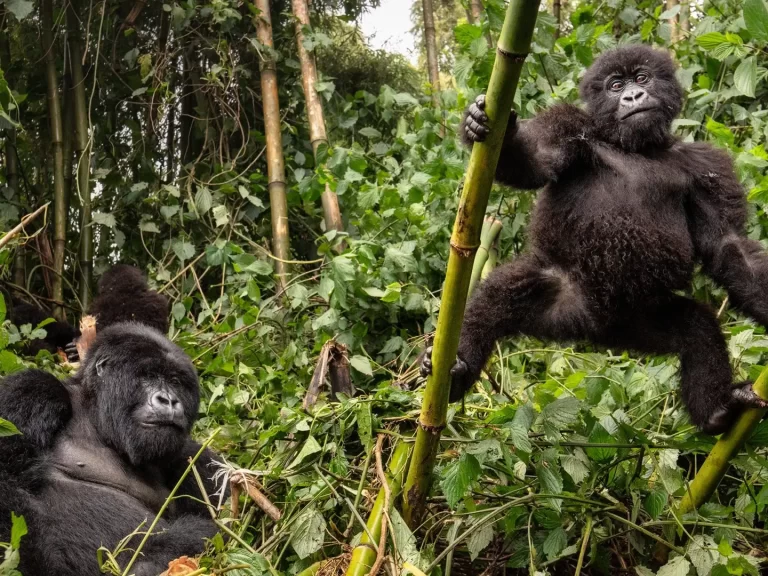
Uganda is one of the world’s premier destinations for mountain gorilla encounters, offering travelers the rare opportunity to come face-to-face with one of humanity’s closest relatives in the wild. The country is home to more than half of the world’s remaining mountain gorillas, found within the dense forests of Bwindi Impenetrable National Park and Mgahinga Gorilla National Park in southwestern Uganda – making Uganda a top choice for a gorilla safari.
For many visitors planning a gorilla safari, one common question arises: what is the difference between gorilla trekking and gorilla habituation? While both experiences involve spending time with mountain gorillas in their natural habitat, they are distinctly different in terms of duration, purpose, visitor experience, group size, and cost.
Understanding these differences can help travelers choose the adventure that best matches their interests, budget, and expectations.
Understanding Gorilla Trekking in Uganda
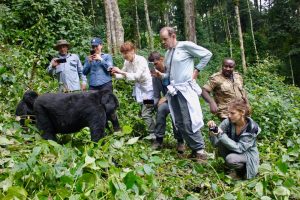
Gorilla trekking is the most popular gorilla tourism activity in Uganda and is also offered in Rwanda and the Democratic Republic of Congo. The experience involves hiking through tropical forests under the guidance of experienced rangers and trackers to locate a habituated gorilla family.
A habituated gorilla family is a group that has undergone a gradual process of becoming accustomed to the presence of humans. Once the gorillas are comfortable with human observers, they can be visited by tourists under strict conservation guidelines.
After locating the gorilla family, visitors are allowed to spend one hour observing the animals.
During this time, trekkers can watch the gorillas feed, groom one another, play, rest, and interact within their family groups. The experience provides incredible opportunities for photography and wildlife observation while maintaining a safe distance from the animals.
In Uganda, gorilla trekking takes place in Bwindi Impenetrable National Park and Mgahinga Gorilla National Park. Rwanda offers gorilla trekking in Volcanoes National Park, while the Democratic Republic of Congo conducts gorilla trekking in Virunga National Park.
For many travelers, the one-hour encounter is enough to create a lifetime memory and offers an intimate glimpse into the lives of these endangered primates.
Understanding Gorilla Habituation in Uganda
Gorilla habituation is a much more immersive and exclusive experience that is only available in Uganda. Unlike gorilla trekking, where visitors meet a fully habituated gorilla family, gorilla habituation allows tourists to accompany researchers, conservationists, and Uganda Wildlife Authority rangers as they work with a semi-habituated gorilla group.
The habituation process is the gradual introduction of gorillas to human presence. It can take between two and five years for a wild gorilla family to become comfortable enough for tourism.
During this period, researchers and trackers spend significant time observing the gorillas, helping them become accustomed to people without altering their natural behavior.
Visitors participating in the Gorilla Habituation Experience join this process and are allowed to spend up to four hours with the gorillas once they are located.
This extended encounter provides a deeper understanding of gorilla behavior, social structures, feeding habits, communication methods, and daily movements. Guests often witness moments that regular trekkers may not see because of the longer observation period.
Gorilla habituation is currently conducted only in the southern sectors of Bwindi Impenetrable National Park, particularly in the Rushaga region.
The Main Difference Between Gorilla Trekking and Gorilla Habituation in Uganda
The biggest distinction between the two experiences lies in the amount of time visitors spend with the gorillas and the stage of habituation of the gorilla group being visited.
Gorilla trekking focuses on observing a fully habituated gorilla family for one hour. The gorillas are already accustomed to seeing tourists and generally continue their daily activities with minimal disturbance.
Gorilla habituation, on the other hand, involves spending up to four hours with a gorilla family that is still undergoing the habituation process. The experience is more research-oriented and offers visitors an opportunity to participate in conservation efforts while enjoying extended observation time.
Because the gorillas are not yet fully accustomed to humans, their behavior can sometimes be less predictable, creating a more adventurous and authentic wilderness experience.
Duration of the Experience
One of the most noticeable differences is the amount of time spent with the gorillas.
During a standard gorilla trek, visitors are permitted to spend only one hour in the presence of the gorilla family. This policy helps reduce stress on the animals and minimizes the risk of disease transmission between humans and gorillas.
In contrast, participants in the Gorilla Habituation Experience are granted up to four hours with the gorillas. The extended duration allows for more detailed observation and a richer understanding of gorilla behavior.
Wildlife enthusiasts, photographers, researchers, and travelers seeking a deeper encounter often find the longer experience especially rewarding.
Group Size and Exclusivity
Group size is another significant difference between the two activities.
A gorilla trekking permit allows up to eight visitors to visit a single gorilla family on any given day. This larger group size makes trekking more accessible and enables more tourists to experience gorilla tourism.
For gorilla habituation, the number of visitors is limited to only four people per day. The smaller group size creates a more exclusive and intimate experience while reducing pressure on the semi-habituated gorillas.
The limited number of permits also contributes to the higher cost of the habituation experience.
Physical Challenge and Hiking Requirements
Both activities involve hiking through mountainous rainforest terrain, but the level of effort required can vary.
Gorilla trekking may involve hikes ranging from less than an hour to several hours depending on the location of the gorilla family on a particular day. Some treks are relatively easy, while others can be physically demanding due to steep slopes, dense vegetation, and muddy trails.
Gorilla habituation is generally considered more strenuous because researchers often follow gorilla groups that move deeper into the forest. Participants may spend longer hours tracking the gorillas before the actual observation begins.
Travelers considering gorilla habituation should be reasonably fit and prepared for a potentially longer day in the forest.
The Cost of Gorilla Habituation vs Gorilla Trekking in Uganda
Cost is often a major factor when choosing between these two experiences.
As of 2026, a gorilla trekking permit in Uganda costs USD 800 per person for foreign non-residents. This permit grants access to one hour with a habituated gorilla family under the supervision of Uganda Wildlife Authority guides.
The Gorilla Habituation Experience permit costs USD 1,500 per person till the end of 2026. Effective January 01, 2027, the permit will go up by $300 to $1,800 per person for foreign non-residents. The higher price reflects the exclusivity of the activity, the limited number of permits available, and the opportunity to spend up to four hours with the gorillas.
Although gorilla habituation costs nearly twice as much as gorilla trekking, many travelers consider the additional time and unique conservation perspective worth the investment.
When comparing value rather than simply price, habituation offers significantly more time with the gorillas and a deeper educational experience. However, gorilla trekking remains an excellent option for visitors seeking an unforgettable encounter at a lower cost.
Photography Opportunities
Photography enthusiasts often debate which experience offers better opportunities for capturing memorable images.
During gorilla trekking, photographers have only one hour to document the encounter. While this is usually sufficient for many visitors, it can feel limiting when lighting conditions are challenging or when gorillas are moving frequently.
Gorilla habituation provides considerably more flexibility. With four hours available, photographers can wait for ideal moments, experiment with camera settings, and capture a broader range of behaviors.
The extended observation period often results in a more diverse and rewarding collection of photographs.
Conservation Impact
Both gorilla trekking and gorilla habituation play crucial roles in mountain gorilla conservation.
Revenue generated from permits supports park management, ranger salaries, anti-poaching efforts, habitat protection, research programs, and community development initiatives.
The success of gorilla tourism has contributed significantly to the recovery of mountain gorilla populations over the past several decades.
Gorilla habituation contributes directly to preparing new gorilla families for future tourism while simultaneously supporting ongoing scientific research. Visitors participating in habituation gain a deeper appreciation for the complex work involved in gorilla conservation.
Both activities help create economic incentives for protecting forests and wildlife, ensuring that local communities benefit from conservation rather than habitat destruction.
Which Experience Should You Choose?
The choice between gorilla trekking and gorilla habituation ultimately depends on personal interests, budget, and travel goals.
Travelers visiting Uganda for the first time often find gorilla trekking to be the perfect introduction to mountain gorillas. The experience is more affordable, widely available, and still provides a remarkable wildlife encounter.
For wildlife enthusiasts, photographers, repeat visitors, and those seeking a deeper understanding of gorilla behavior, gorilla habituation offers a level of immersion that few wildlife experiences can match. Spending four hours with a semi-habituated gorilla family provides extraordinary insight into the lives of these magnificent primates.
Some visitors even choose to do both experiences during the same safari, combining the excitement of traditional trekking with the educational depth of habituation.
In conclusion, Gorilla trekking and gorilla habituation are two extraordinary wildlife experiences that showcase Uganda’s leadership in mountain gorilla conservation. While gorilla trekking is available in Uganda, Rwanda, and the Democratic Republic of Congo, gorilla habituation remains a unique privilege found only in Uganda.
Gorilla trekking offers a one-hour visit to a fully habituated gorilla family, making it an accessible and unforgettable adventure for most travelers. Gorilla habituation, meanwhile, provides a rare opportunity to spend four hours with a semi-habituated group while learning about the conservation work that makes gorilla tourism possible.
Whether you choose trekking or habituation, encountering mountain gorillas in the wild is one of Africa’s most profound wildlife experiences. Both activities contribute directly to the protection of these endangered primates while creating memories that last a lifetime.
Book your Uganda Gorilla Habituation experience safari with Uzuri Uganda Safaris for an encounter that truly lives up to its top billing.